




Understand Bitcoin Live Price: Clear Guide to Real-Time Value
April 25, 2026
by Niels from Clicks and Trades Editorial Team
Have you ever tried to check the bitcoin live price and felt completely lost? Maybe you saw a complicated bitcoin chart live with numbers jumping everywhere.
It’s easy to feel confused by all the information. One moment the btc price is up, the next it is down. It can make you feel worried about what to do next. You might even see lots of different ideas on social media, which just adds to the noise. This can lead to a lot of decision anxiety for many beginners.
Actually, it doesn’t have to be so hard to understand the bitcoin live price. Even though Bitcoin is a big deal around the world and is legal in many countries in 2026, getting a clear view of its value can still feel tricky for new folks looking at the btc price today [1].
In this guide, we’ll make understanding the bitcoin live price simple. We’ll break down what "bitcoin price usd live" really means and where that number comes from. You’ll learn easy ways to spot important signals and understand the bitcoin price news today without getting overwhelmed. We’ll help you cut through all the confusing charts and online chatter so you can feel calmer and more sure about your choices.
To help you stay informed and make confident decisions, consider checking out the free Clicks and Trades newsletter. It offers simple, step-by-step crypto education and safety tips for everyday users. You can also explore how to find clear market insights by learning about crypto news aggregators.
Ready to get a clearer picture of the market?
Sign up for the free Clicks and Trades newsletter today.
What ‘bitcoin live price’ actually means
When you hear "bitcoin live price," it simply means the most current price Bitcoin is being bought and sold for right now.
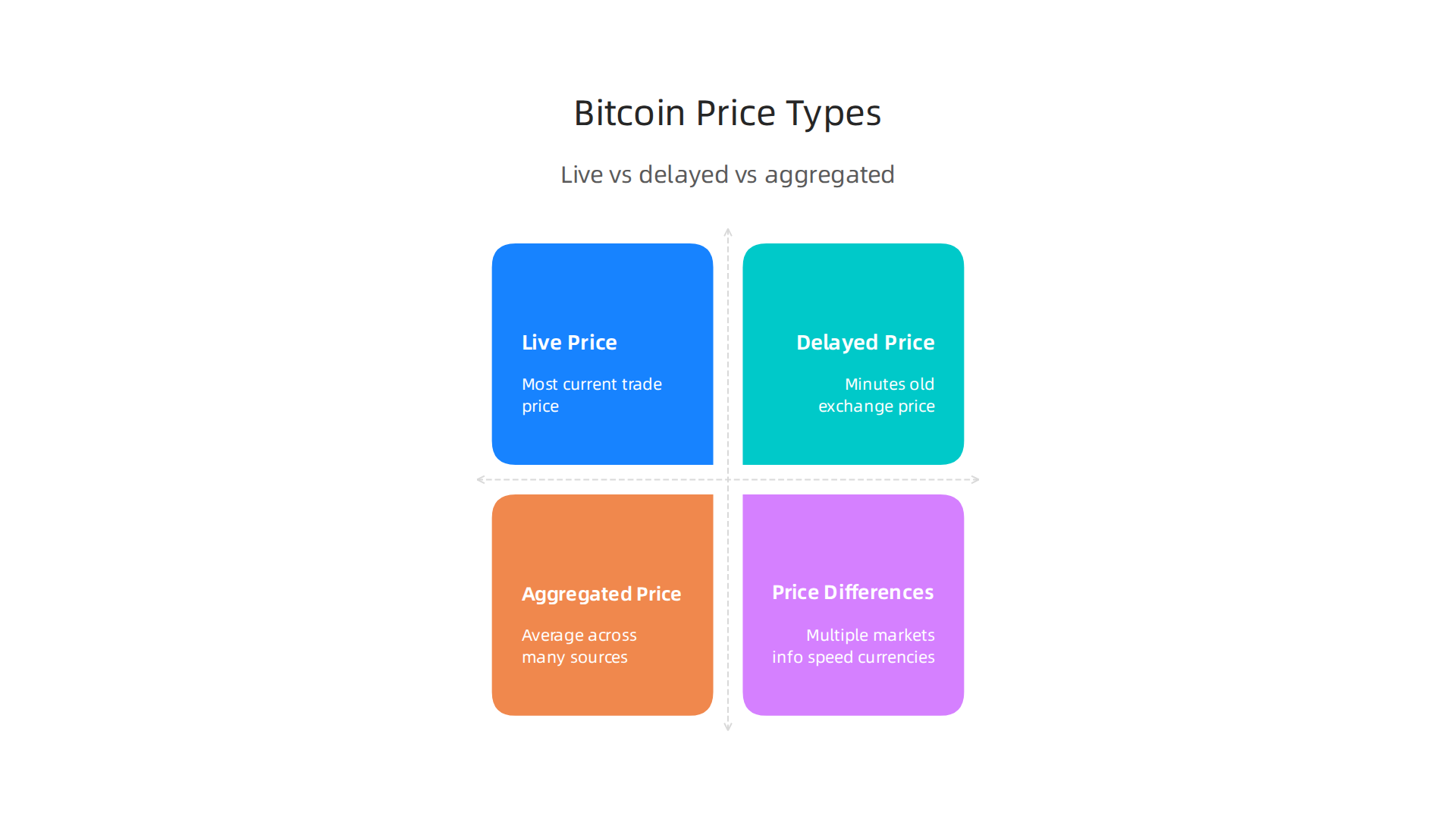
Think of it like a store displaying the price of an item. The "live" part means that price changes very fast, sometimes every second, because people are always trading Bitcoin around the world. So, what you see is the current "btc price" at that moment.
This is different from a "delayed price," which might be a few minutes old. It’s also different from an "aggregated price," which is an average price collected from many different places. While helpful for a general idea, an aggregated price might not show you the exact "bitcoin price USD live" that someone is paying or selling for right then.
Why Bitcoin Prices Can Look Different
You might open a "bitcoin chart live" on one website and then check another, only to find slightly different numbers. That’s totally normal, and here’s why:
- Many Marketplaces: Bitcoin trades on many different online places, called exchanges. Each exchange is like its own marketplace with its own buyers and sellers. For example, some people might want to buy Bitcoin for one price on one exchange, while on another, sellers are offering it for a tiny bit more or less.
- Speed of Information: Even though the internet is fast, sometimes it takes a fraction of a second for every website to update. So, one site might get the very latest trade quicker than another.
- Local Currencies: The "bitcoin price CAD" (Canadian dollars) will look different from the "bitcoin price USD live" (US dollars) simply because of currency exchange rates. But even within the same currency, like USD, slight differences can pop up.
What you see as the "bitcoin live price" is usually based on the latest transactions happening on a specific exchange. Experts even study how economic news and other factors quickly affect these prices [1, 2].
The main idea is that the "bitcoin live price" is a real-time snapshot. It shows what buyers and sellers are agreeing on right now. Understanding this helps you make sense of why the "btc price today" can jump around. To stay calm and informed about these movements, looking at easy-to-understand summaries can really help. It lets you quickly grasp the "bitcoin price news today" without getting lost in too many complicated charts.
If you’re looking for clear, step-by-step guidance to understand market movements and avoid getting overwhelmed by all the numbers, the free Clicks and Trades newsletter can be a great help. It offers simple crypto education and safety tips for everyday users.
Ready to get a clearer picture of the market?
Sign up for the free Clicks and Trades newsletter today.
When we talk about the "bitcoin live price," it’s not a magic number that just appears. It’s actually put together from many different small actions happening all the time. Let’s break down how this "btc price" gets figured out, simply.
The Big List of Buys and Sells: Order Books
Imagine a big digital chalkboard at each Bitcoin exchange, showing what everyone wants to do. This is called an "order book."
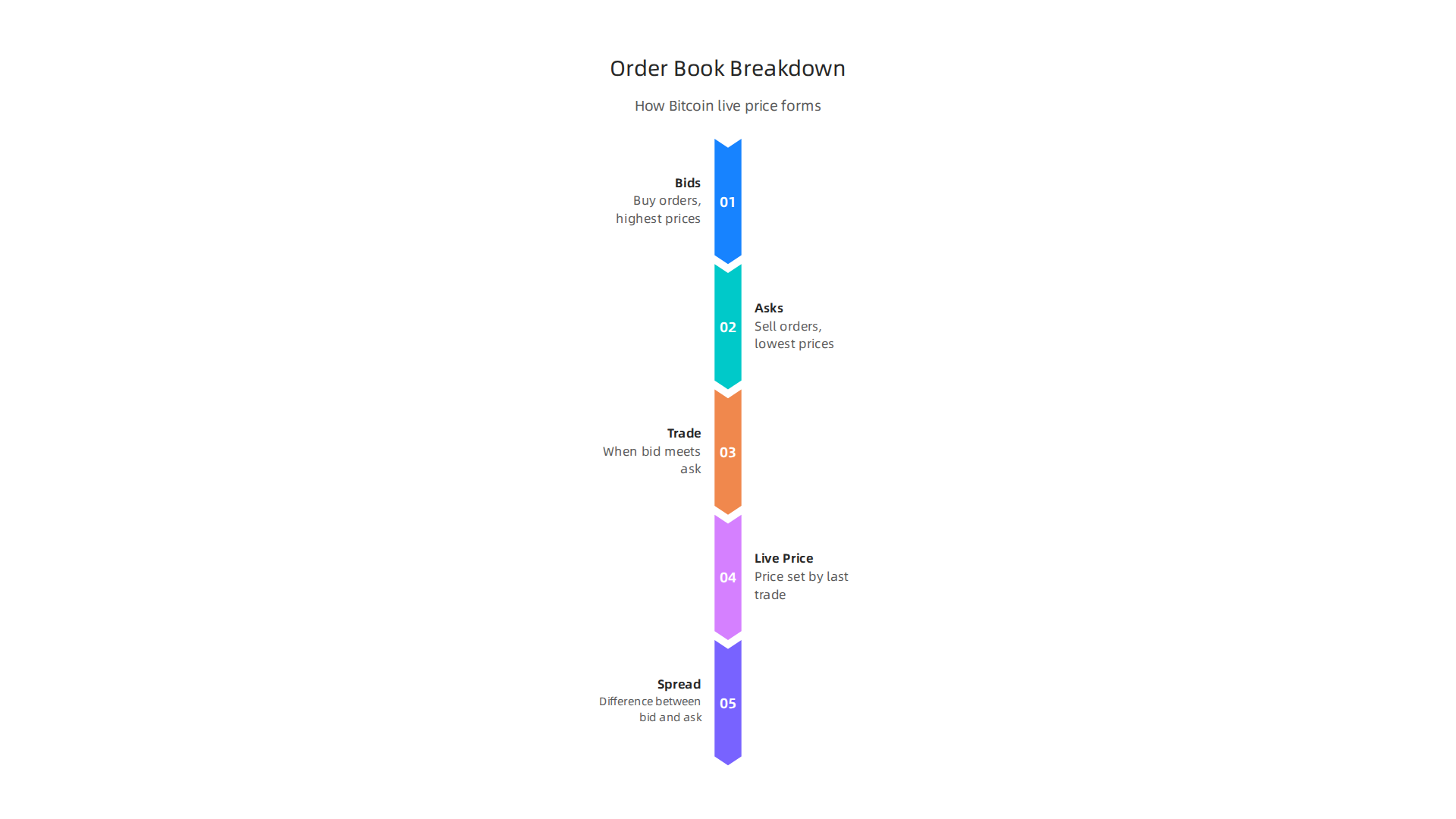
- Buyers’ Side (Bids): On one side, you see all the people who want to buy Bitcoin. They list how much Bitcoin they want and the highest price they are willing to pay for it. These are called "bid" prices.
- Sellers’ Side (Asks): On the other side, you see all the people who want to sell Bitcoin. They list how much Bitcoin they have and the lowest price they are willing to sell it for. These are called "ask" prices.
This order book is changing every second, with new buyers and sellers coming in.

Experts use very detailed market data to understand these rapid changes and predict prices [1, 2].
When a Deal Happens: A Trade
A "trade" happens when a buyer and a seller agree on a price. For example, if someone selling Bitcoin is asking $60,000, and someone buying Bitcoin offers $60,000, then a trade happens at that exact price.
- The Live Price: The moment that trade happens, its price becomes the very latest "bitcoin live price" on that specific exchange. It’s like the last item sold at a market sets the immediate going rate.
- The Spread: You’ll notice a small gap between the highest price a buyer offers (bid) and the lowest price a seller asks (ask). This gap is called the "spread." A smaller spread means there are lots of buyers and sellers, so the market is very busy and active.
How Different Sites Show the Price
Because Bitcoin trades on so many different exchanges around the world, the "bitcoin price USD live" or "bitcoin price CAD" can look a little different from one website to another.
- Last Traded Price: Most simple "bitcoin chart live" displays just show you the price of the very last trade on the exchange they are getting their information from.
- Weighted Averages: Some websites try to give you a more general "btc price today" by taking prices from many exchanges and averaging them out. They might give more importance, or "weight," to prices from bigger exchanges or bigger trades because those show what more money is actually doing [3].
Why the Numbers Change and Why it Matters
The way the "bitcoin live price" is calculated means a few things are important:
- Liquidity: This is how easily Bitcoin can be bought or sold without changing its price too much. If an exchange has high liquidity (lots of buyers and sellers), prices tend to be more stable. If only a few people are trading, a single big order can make the price jump up or down a lot. Think of it like a big pool of water versus a small puddle.
- Exchange Choice: The exchange you use matters. A very big exchange might have a more stable "bitcoin live price" because there are so many trades happening. If you’re using a specific "bitcoin calculator," make sure you know which exchange it’s getting its data from.
- Trade Size: Placing a very large order to buy or sell can sometimes move the price on an exchange, especially if the exchange isn’t super busy.
Understanding these simple ideas helps you make sense of why the "bitcoin live price" is always moving. It also helps explain why market signals and economic news can quickly affect prices [4, 5].
It can feel like a lot to keep track of, right? That’s why having clear, easy-to-understand information is so helpful. To stay informed without getting lost in the details, you might find the free Clicks and Trades newsletter a valuable resource. It provides simple crypto education and safety tips for everyday users, helping you understand market movements and avoid getting overwhelmed.
Want to get a clearer picture of the market with easy-to-understand insights?
Sign up for the free Clicks and Trades newsletter today.
When you watch the numbers for the "bitcoin live price" jump around, you might wonder where everyone gets those numbers. After all, we just learned that the price is made up of many trades on different places. So, let’s look at the best places for beginners to check the "btc price today" so you can trust what you see.
Different Places to Check the Bitcoin Live Price
It’s helpful to know that not all sources are the same. Each one gathers its information in slightly different ways.
- Individual Crypto Exchanges:
These are the most basic places to see the "bitcoin live price." An exchange is like a big marketplace where people buy and sell Bitcoin.- What you see: Each exchange shows the very latest price from trades happening on its own platform. If you check Binance, you see Binance’s latest "bitcoin price USD live."

If you check another exchange, you might see a slightly different "bitcoin price CAD."
* Good for: Seeing the exact price if you plan to buy or sell on that specific exchange. The data you see is very fast, often in real time, showing changes as they happen [1, 2].
* Things to remember: Prices can differ a little between exchanges because each has its own buyers and sellers.
- Price Aggregators and Tracking Sites:
These websites are like grand central stations for crypto prices. They don’t host trades themselves. Instead, they collect price information from many different exchanges.- What you see: They often show a "weighted average" price. This means they take prices from many exchanges and give more importance to the bigger exchanges or bigger trades to get a general "btc price today."
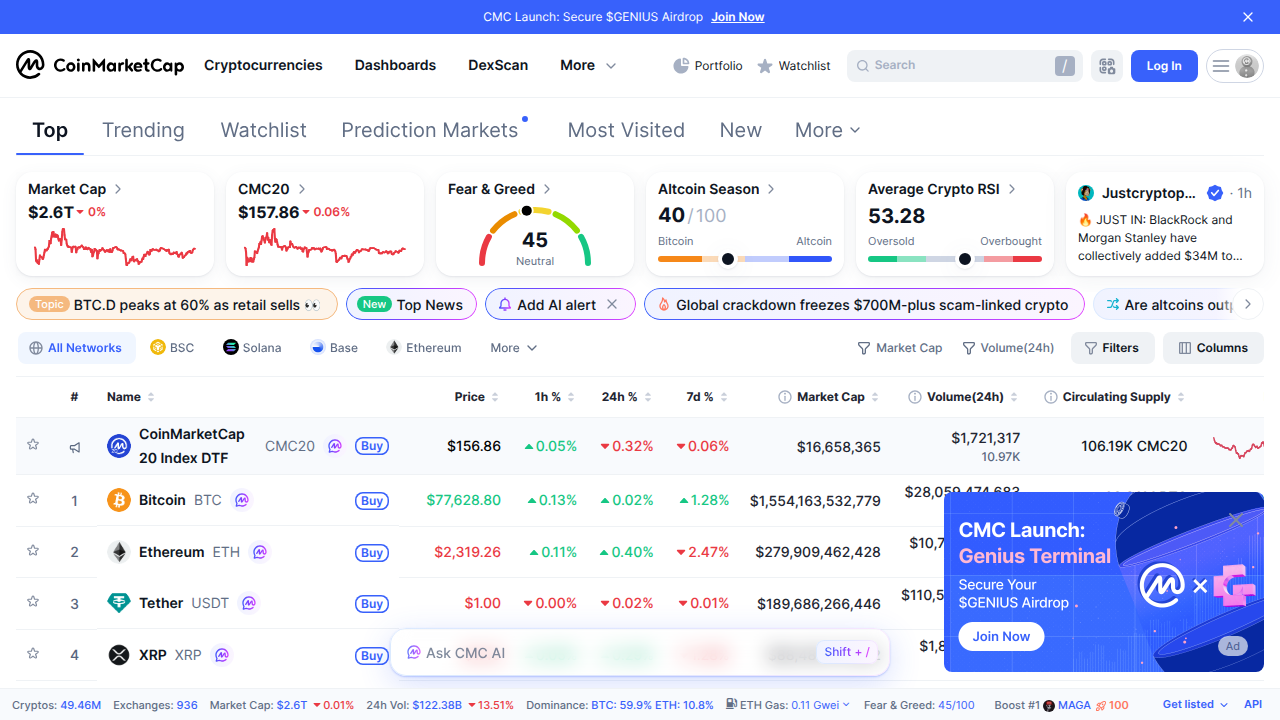
This gives you a broader view of the market, not just one exchange’s price. Many of these also show a "bitcoin chart live" so you can see how the price has moved over time.
* Good for: Getting a general idea of the "bitcoin live price" across the whole market. For beginners who want simple ways to track the market without complex charts, services like Cryptocurrency Trend offer clear summaries and easy-to-read trend indicators to help make sense of price movements.
* Things to remember: The price on these sites is a good overview, but it might not be the exact price you get if you go to a single exchange to make a trade. You can learn more about how these types of tools help by checking out how to master crypto news aggregators for clear market insights.
- Data APIs (For Advanced Tools):
You probably won’t use these directly as a beginner, but they are important to know about. APIs are like special data feeds that allow different computer programs to talk to each other.- What they do: Many websites, apps, and even some fancy "bitcoin calculator" tools use APIs to pull in "real-time data exchange" directly from exchanges [3]. This lets them display the latest "bitcoin live price" or build complex charts.
- Good for: Developers and advanced users who need direct, fast data feeds for their own tools or analyses. These connections ensure that payment ecosystems can handle real-time liquidity and cross-border payments efficiently [4].
How to Pick a Trustworthy Source
As a beginner, you want sources that are easy to understand and dependable. Here’s what to look for:
- Speed (Latency): You want information that’s as close to "real time" as possible. Prices can change fast. Look for sites that update every few seconds. In 2026, real-time data streaming is expected to decide if actions need to be taken right away [5].
- Clear Information (Transparency): A good source will often tell you where it gets its price data from. If it’s an aggregator, it might list the exchanges it uses. This helps you trust the numbers.
- Broad View (Coverage): For a general "bitcoin live price," an aggregator that pulls data from many big exchanges usually gives you a more complete picture than just one exchange.
In the end, checking a reliable price aggregator like those recommended for clear market insights can be very helpful. They cut through the noise and give you the facts without being overwhelming.
Staying informed without getting lost in all the numbers can be tough. That’s why having easy-to-understand info is so useful. For simple crypto education and safety tips, the free Clicks and Trades newsletter can be a great friend.
Want to get a clearer picture of the market with easy-to-understand insights?
Sign up for the free Clicks and Trades newsletter today.
When you look at the "bitcoin live price" on different sites, it’s easy to get confused by all the ups and downs. The market can feel very noisy, with prices changing every second. But you don’t need to be a math whiz to spot important signals. As a beginner, you can focus on a few simple clues that help you see the bigger picture without overthinking every small change. These signals help you avoid getting scared by little wobbles in the "btc price today" and focus on what’s really happening.
Here are three easy-to-understand signals that can help you make sense of the "bitcoin live price" in 2026:
1. The Moving Average: Smoothing Out the Bumps
Imagine you want to know if the weather has been getting warmer or colder over the last week, but you don’t want to worry about every single day’s temperature. You might take the average temperature for the whole week. A moving average for Bitcoin works much the same way. It’s simply the average price of Bitcoin over a certain number of past days, like 10 days or 50 days.
- What it tells you: A moving average helps to smooth out the "bitcoin live price" chart, making it easier to see the main direction Bitcoin is moving in [1]. When the current "bitcoin live price" stays above its moving average, it’s often a sign that the price is generally going up. If the price falls below the moving average, it might mean the price is generally going down.
- How it reduces noise: By looking at the average, you ignore the tiny, quick price jumps and drops that don’t mean much in the long run. It helps you see the overall flow on a "bitcoin chart live" without getting lost in the details. You can learn more about how to read these charts by watching helpful guides like this one on how to read Bitcoin price charts for beginners [2].
2. Trading Volume: How Many People Are Trading
Trading volume tells you how much Bitcoin has been bought and sold over a certain time, like an hour or a day. Think of it like a store: if a lot of people are buying a certain toy, that toy is popular. If few people are buying it, it’s not.
- What it tells you: When the "bitcoin live price" makes a big move (either up or down) and the trading volume is very high, it means many people are agreeing with that move. This makes the move stronger and more likely to continue [3]. But if the price moves a lot with very low volume, it might just be a quick blip that won’t last.
- How it reduces noise: High volume confirms a price change is important, helping you tell the difference between a real shift and a small, unimportant wiggle. If the price goes up a lot but few people are trading, you know it might not be a strong move.
3. Confirmed Trend Direction: Following the Path
The trend direction is simply the main path the "bitcoin live price" is taking over time. Is it generally moving higher, lower, or staying mostly flat?
- What it tells you:
- Uptrend: If you see the "bitcoin live price" reaching new higher points, and then when it drops a little, it doesn’t fall as low as before, that’s a sign of an uptrend. Bitcoin’s journey to its "bitcoin all time high" often happens in such steps [4].
- Downtrend: If the price keeps hitting new lower points, and then when it rises a little, it doesn’t go as high as before, that’s a downtrend.
- How it reduces noise: Focusing on the trend helps you not panic over every small price dip if the overall trend is still up. Or, it helps you be careful if the trend is clearly down, even if there are small price bumps along the way. Understanding these patterns can help make informed decisions in the market [5].
Bringing It All Together
By watching these simple signals, you can get a much clearer idea of what the "bitcoin live price" is truly doing. You won’t feel overwhelmed by every small change. These tools are like basic guides to help you understand the market better without needing to become an expert overnight [6].
Staying informed without getting lost in all the numbers can be tough. That’s why having easy-to-understand info is so useful. For simple crypto education and safety tips, the free Clicks and Trades newsletter can be a great friend. It helps everyday crypto users like you get clear market insights without all the complex charts.
Want to get a clearer picture of the market with easy-to-understand insights?
Sign up for the free Clicks and Trades newsletter today.
Filtering Influencer Noise and Misinformation
You’ve just learned about important signals like moving averages and trading volume that help you understand the true "bitcoin live price." But there’s another kind of noise out there that can be tricky: social media chatter and influencer tips.

In 2026, it’s easier than ever to get caught up in what others are saying online.
Sometimes, people who are popular on social media, called influencers, can have a big effect on cryptocurrency prices [1]. When they talk about a certain coin, like Bitcoin, many people might rush to buy or sell it. This can make the "btc price" jump around quickly [2, 3]. It’s like a wave of excitement or fear washing over the market. This "social media sentiment" can really push prices up or down [4, 5].
Here’s the thing: sometimes, influencers are just talking about price changes after they happen, not causing them [6]. So, what they say might not be a real, long-lasting change in the "bitcoin live price." It’s different from the steady signals we discussed, like high trading volume confirming a true trend. A sudden price bump because an influencer tweeted something might not last, while a move backed by strong volume usually means more people agree on that price direction.
Since about half of all social media users have invested in digital money, it’s super important to be smart about who you listen to [7]. To help you filter out the noise and avoid misinformation, here’s a simple checklist:
A Quick Check Before You Act
Before you get excited or worried by something you read or hear online about the "bitcoin live price," ask yourself these questions:
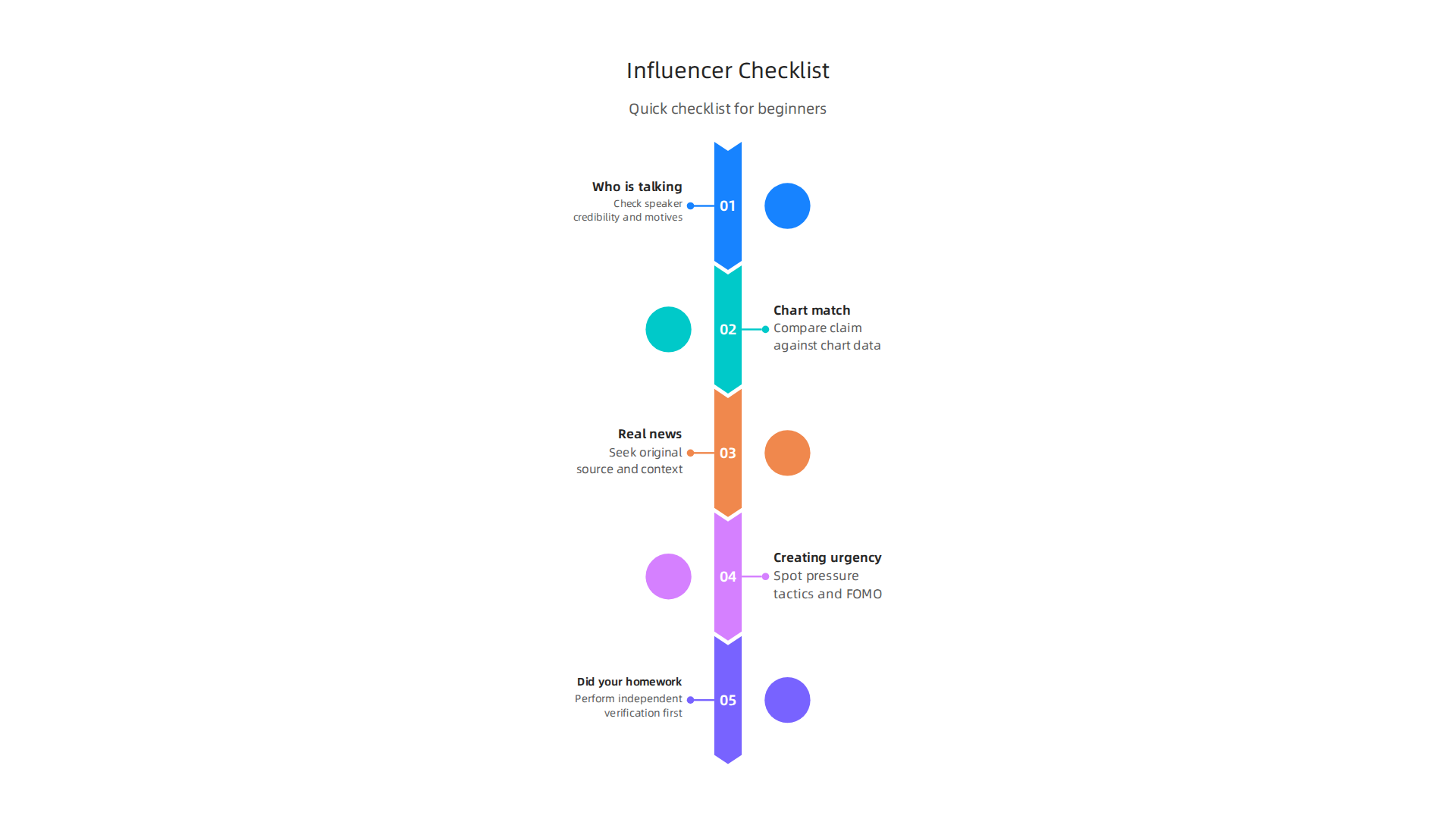
- Who is talking? Is it a trusted expert, or just someone famous online? Does this person explain why something is happening, or just tell you what to do?
- Does it match the chart? Look at a "bitcoin chart live" yourself. Does what the person says line up with the moving average, trading volume, or overall trend you see? If the chart doesn’t support their big claims, be careful.
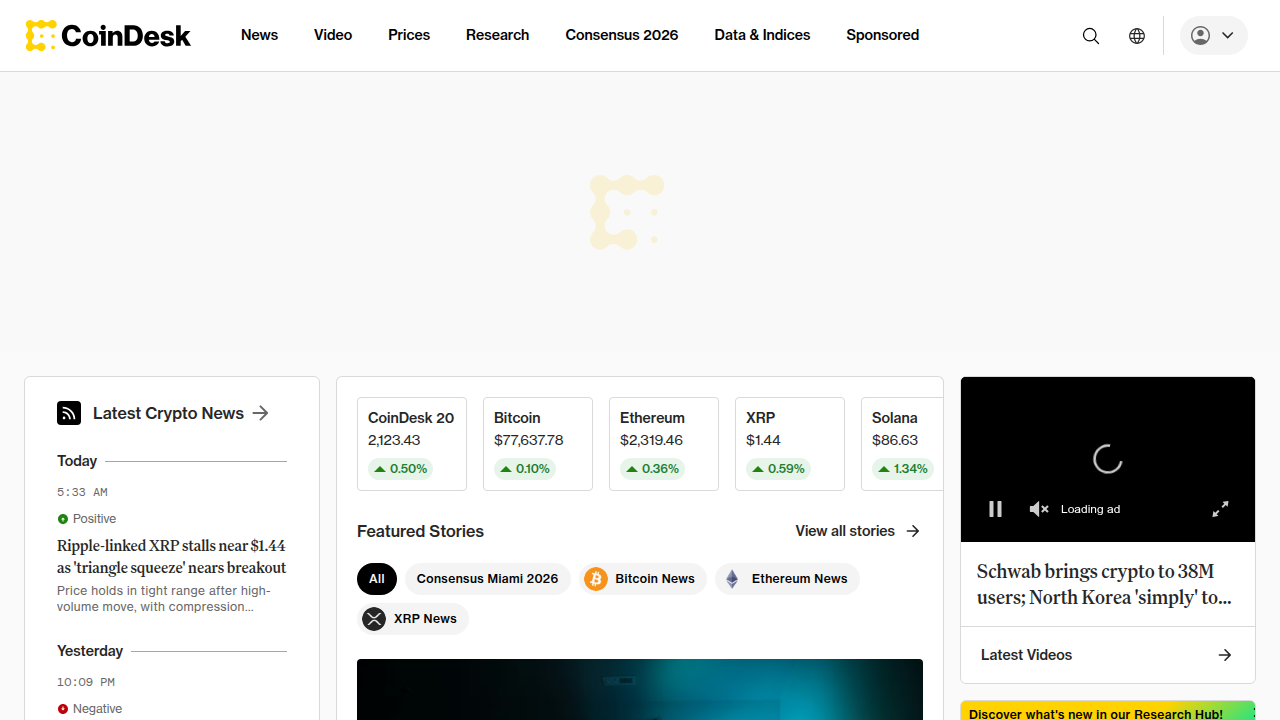
- What’s the real news? Check out other reliable "bitcoin price news today." Do other trustworthy sources report the same thing? Learning how to use tools like crypto news aggregators can help you get clearer insights from many sources at once.
- Are they creating urgency? If someone tells you to "buy now or miss out" (often called FOMO, or fear of missing out), that’s a red flag. Making decisions when you’re feeling rushed can lead to mistakes [8]. Reports in 2026 show that emotions like FOMO still heavily shape how people invest [9, 10].
- Did you do your own homework? Always try to understand why a price might move. Don’t just follow blindly. The more you learn, the more confident you’ll feel.
By using this simple checklist, you can better tell the difference between real market moves and quick bursts of influencer-driven hype. This helps you stay calm and make clearer choices about the "bitcoin live price." For more simple, step-by-step crypto education and safety tips, the free Clicks and Trades newsletter can be a great help, cutting through the noise to give you clear market insights.
Want to get a clearer picture of the market with easy-to-understand insights? Sign up for the free Clicks and Trades newsletter today.
Making smart choices about the "bitcoin live price" means learning to filter out what doesn’t matter and focusing on what does. After spotting fake hype, the next step is to make sure your own decisions are calm and well-thought-out. In 2026, with so much information flying around, having a simple checklist can really help.
Here’s how you can make calmer, more confident choices when looking at the "btc price":
- Check Your Sources Again: Remember that advice from popular social media figures might not always be reliable. Always cross-check what you hear with actual market data. Look at a "bitcoin chart live" yourself and see if the moving averages or trading volume support the claims [1]. Reliable technical indicators can help you understand true trends [2].
- Know Your Timeframe and Goals: Are you interested in the "btc price today" for a quick trade, or are you thinking about holding Bitcoin for a longer time, like those who bought back when the "bitcoin price in 2015" was much lower? Your goal changes how you should react to daily ups and downs. Don’t let short-term noise make you forget your long-term plan.
- Set Your Limits (Position Sizing): This is super important. Only put money into Bitcoin or any crypto that you are okay with losing. Never invest more than you can afford. This helps you stay calm even if there’s a "bitcoin price crash." Don’t put all your money in one place. Using a simple "bitcoin calculator" can help you plan, but only you know your financial comfort zone.
- Take a Cooling-Off Break: If you see the "bitcoin live price" suddenly jump or fall, and you feel a strong urge to buy or sell, take a deep breath. Wait for a little while, perhaps an hour or even a day, before you do anything. This "cooling-off" period helps you think clearly instead of letting emotions like FOMO (fear of missing out) or panic take over [3]. Reports from 2026 show that emotions still play a big part in how people invest [4].
By following these simple steps, you can avoid rushed decisions and feel more secure about your choices.

It’s about combining common sense with helpful tools like understanding technical analysis to truly grasp the "bitcoin live price." For more simple, step-by-step crypto education and safety tips, the free Clicks and Trades newsletter is a helpful tool that cuts through the noise to give you clear market insights and helps you track market trends in an easy-to-understand way.

Want to get a clearer picture of the market with easy-to-understand insights? Sign up for the free Clicks and Trades newsletter today.
Summary
This article breaks down how the bitcoin live price is formed and shows beginners simple ways to understand it without getting overwhelmed. It explains the difference between last traded prices on individual exchanges, aggregated prices, and why small discrepancies appear across sites. The guide walks through order books, trades, spreads, and how liquidity and trade size affect price movements. You’ll learn three easy signals—moving averages, trading volume, and confirmed trend direction—that cut through short-term noise. The piece also explains how social media and influencers can distort prices and gives a short checklist to verify claims before acting. Finally, it offers practical steps to make calmer trading choices and points to reliable tools and aggregators for clearer market insights. After reading, you’ll be able to check BTC prices confidently and make better-informed, less emotional decisions.
