



Crypto Meaning: What Nobody Tells You About Digital Currency
April 13, 2026
by Niels from Clicks and Trades Editorial Team
Introduction: Decoding Crypto for the Everyday Investor
You hear about it everywhere. Your neighbor talks about it, the news reports on wild price swings, and every other social media post seems to mention a new coin. In 2026, cryptocurrency is more mainstream than ever, with 30 percent of Americans now owning some form of digital asset. Yet, for many, the actual crypto meaning remains a confusing blur of flashing charts, strange terms, and too-good-to-be-true promises.
If you’ve ever looked at a screen full of candlesticks or heard terms like "crypto funding rates" and felt a wave of anxiety, you’re not alone.

The biggest hurdle for new investors isn’t just volatility. It’s the sheer noise. The market is a whirlwind of complex crypto market cap calculator data, debates over stable coins, conflicting predictions on crypto prediction market platforms, and endless streams of live charts for everything from iota charts live to woo charts bitcoin. Trying to figure out how many crypto coins are there can be a dizzying task in itself.
This leaves everyday people stuck. You want to understand the market and make smart decisions, but you’re drowning in complex charts or swayed by the latest influencer hype. This constant buzz creates what analysts call "market psychology noise," which can cloud judgment and lead to rushed choices. While blockchain technology is secure, navigating the apps and information built on it is full of pitfalls for the unprepared.
That’s where this guide comes in. Our promise is simple: to cut through the chaos. We’ll translate the jargon, explain the core concepts in plain language, and show you how to identify genuine trends versus short-lived crypto bubbles. Think of this as your first, trusted map in an uncharted territory.
To continue getting clear, step-by-step guidance that helps you ignore the noise, consider subscribing to the free Clicks and Trades newsletter. It’s packed with practical crypto education and safety tips delivered in a simple, trustworthy tone.
Ready to move from confusion to clarity? Sign up for our free beginner’s newsletter and start your journey with confidence.
What Does ‘Crypto’ Really Mean? The Core Idea Demystified
Let’s start with the simple answer. At its heart, crypto meaning is about a new kind of digital asset that is secure, decentralized, and exists on a shared public record. Think of it as digital value that you can send directly to someone else online, without needing a bank or government in the middle to approve the transaction.
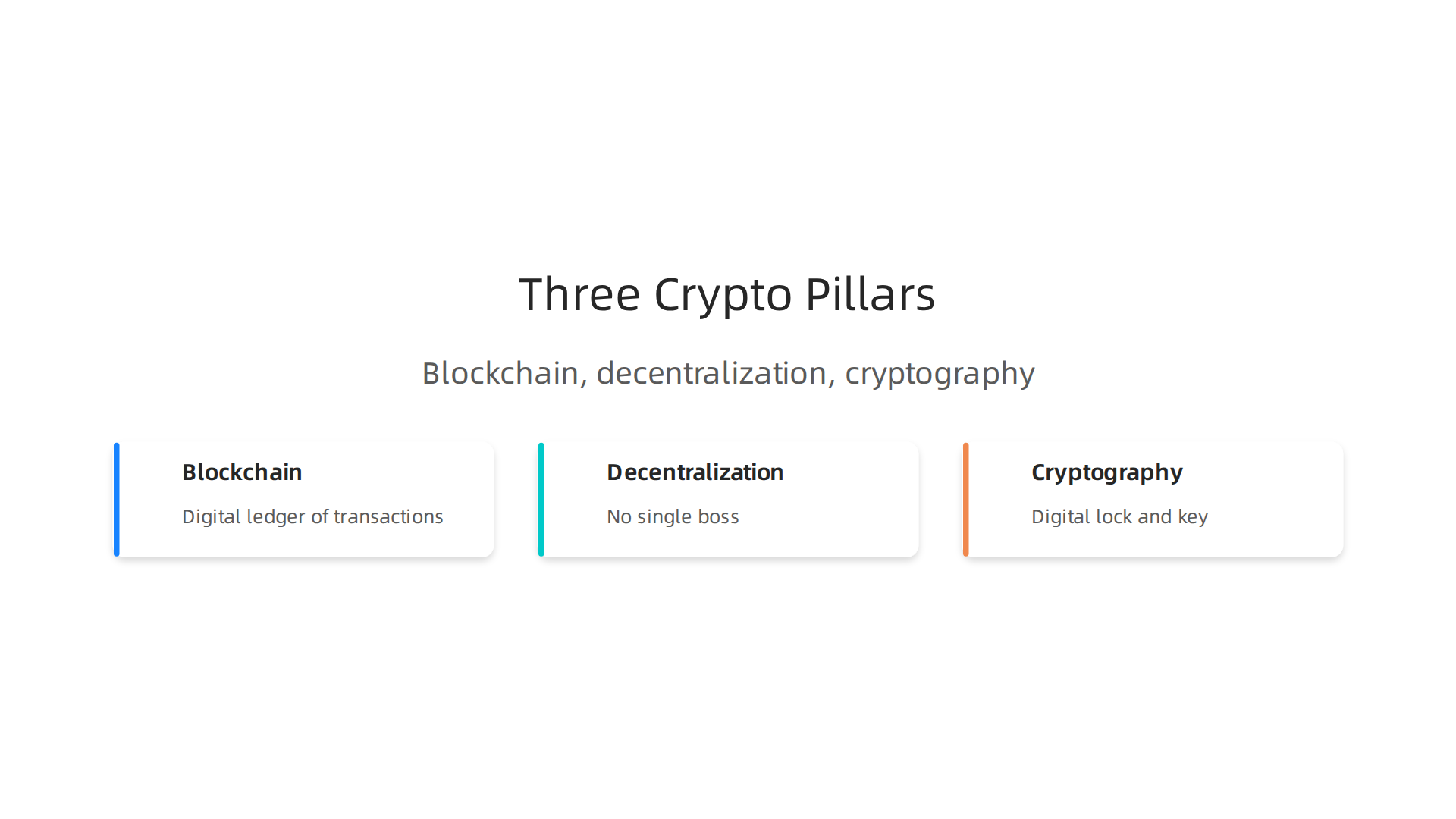
Officially, a cryptocurrency is a digital currency, an alternative form of payment created using encryption algorithms. But that definition only scratches the surface. The real power lies in three key ideas working together: blockchain, decentralization, and cryptography.
The Three Pillars of Crypto
-
The Digital Ledger (Blockchain): Imagine a shared spreadsheet that thousands of computers around the world hold a copy of. Every time someone sends crypto, that transaction is recorded as a new line on the spreadsheet. Once added, it’s nearly impossible to erase or change, creating a permanent, transparent history. This is the blockchain.
-
No Single Boss (Decentralization): Unlike your dollars, which are issued and managed by a central bank, cryptocurrency is by definition currency that is decentralized, not overseen by any central authority. No single company, government, or bank controls the network. It’s run by the collective computing power of its users.
-
Digital Lock and Key (Cryptography): This is where the "crypto" part comes in. Advanced cryptography secures your transactions and controls the creation of new units. It proves you own your digital assets and ensures that only the intended recipient can access the funds you send.
How Is This Different From Regular Money?
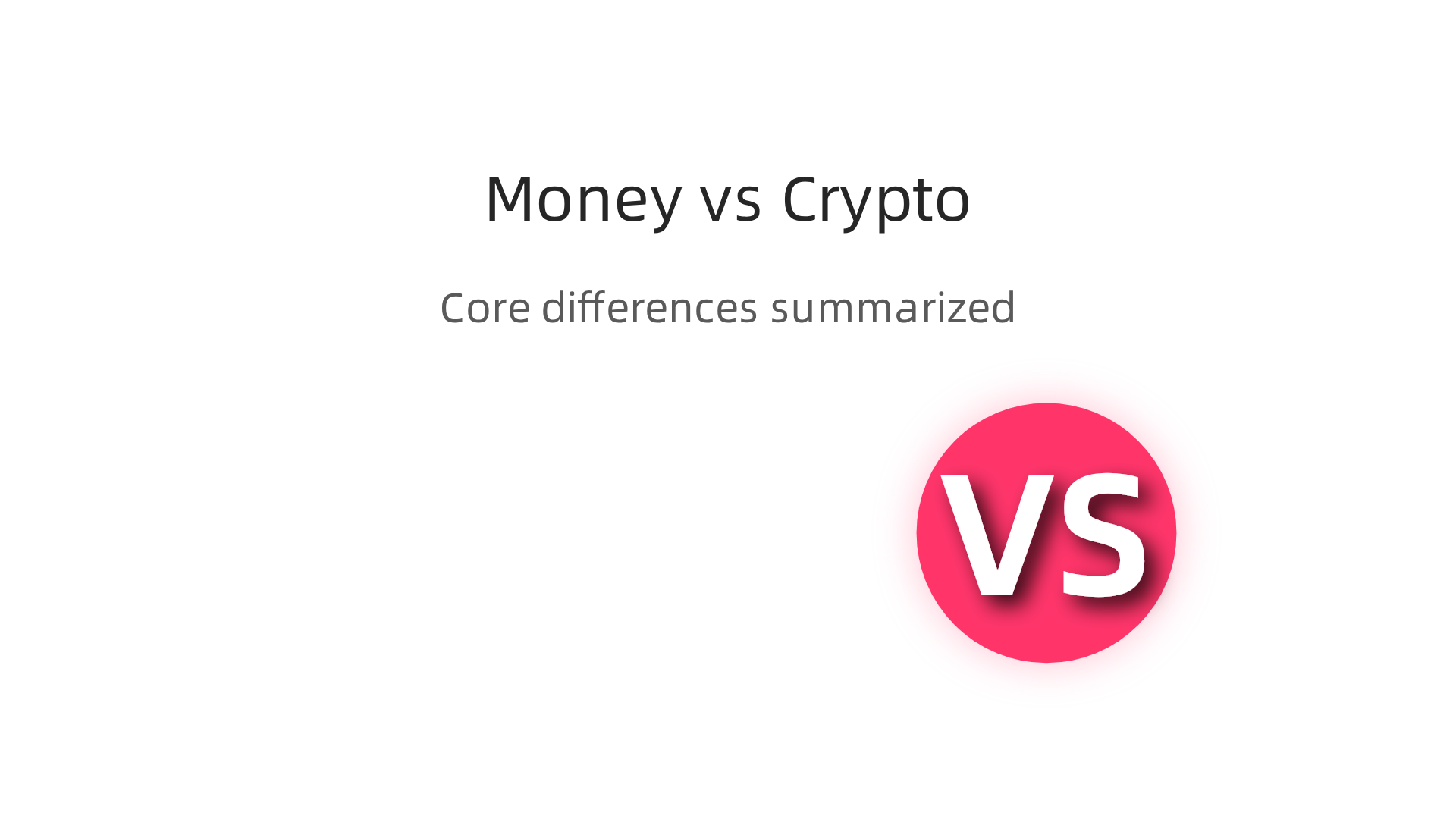
It’s a fair question. You can see and touch a dollar. Crypto is a type of digital currency that generally exists only electronically. Here’s a quick comparison:
| Feature | Traditional Money (e.g., US Dollar) | Cryptocurrency (e.g., Bitcoin) |
| :— | :— | :— |
| Form | Physical (cash) and digital (bank balance). | Purely digital. |
| Control | Centralized. Issued and regulated by governments and banks. | Decentralized. Managed by a network of computers. |
| Transaction Record | Private. Your bank keeps its own ledger. | Public. Transactions are recorded on a shared blockchain for anyone to see. |
| Value Backing | Based on government decree and economic trust (fiat). | Based on scarcity, utility, and market demand. |
Understanding this difference is key. It explains why the price can be volatile and why the total crypto market cap calculator numbers you see represent the combined value of all these digital assets based on what people are willing to pay for them.
So, What Can You Actually Do With It?
People use crypto for several reasons:
- As an Investment: Many buy and hold cryptocurrencies, hoping their value will increase over time.
- To Send Money: You can send funds directly to anyone, anywhere, often faster and with lower fees than traditional international wire transfers.
- To Store Value: In some places with unstable currencies, people use crypto as a way to protect their wealth.
- To Use Decentralized Apps: A new world of applications (DeFi, gaming, etc.) runs on blockchain networks and uses crypto as fuel.
Clearing Up Common Questions
You might be wondering, "how many crypto coins are there?" The answer is always changing, as new projects launch. In 2026, there are thousands, but only a smaller number have significant use and value. These range from well-known names like Bitcoin to stable coins (which are pegged to assets like the US dollar to reduce volatility) and everything in between.
It’s easy to get caught up in every new trend or live chart update. Remember, the goal is to understand the core system, not to react to every blip on an iota charts live feed or woo charts bitcoin analysis. A strong foundation helps you spot genuine innovation and avoid dangerous crypto bubbles.
If this breakdown of the core crypto meaning is helpful, you might enjoy our deeper look at specific projects, like what is XRP and why it exists. Building your knowledge step-by-step is the best way to feel confident.
Ready for the next step? Continue cutting through the noise with clear, trustworthy guidance. Sign up for our free beginner’s newsletter to get practical crypto education and safety tips delivered straight to you.
Blockchain: The Trust Machine Behind Crypto
Think back to the shared spreadsheet idea. That’s your best mental model for the blockchain. It’s the revolutionary digital ledger that makes the entire crypto meaning possible. Without it, you couldn’t have a secure, decentralized digital asset.
Picture a Google Sheet that isn’t stored on one company’s server. Instead, thousands of identical copies exist on computers worldwide. Every time a transaction happens, like "Alex sends 0.01 Bitcoin to Sam," it’s written as a new line in the sheet. The network agrees it’s valid, and then that line is locked in. Permanently. This creates a chain of data blocks, hence the name "blockchain."
This design gives blockchain two superpowers:
- Transparency: Anyone can look at the ledger. You can trace where funds have moved, creating a public history you can trust. This transparency is a big reason people use tools like a crypto market cap calculator; the data comes from these open, verifiable blockchains.
- Immutability: Once a transaction is added to a block and that block is confirmed, it’s nearly impossible to change or delete. It’s like writing in permanent ink on that shared sheet. This security builds trust without needing a bank to act as the middleman.
So, who updates this giant, shared spreadsheet? That’s where "mining" or "staking" comes in. These are the processes where people use their computers to help validate new transactions and secure the network. In return, they often earn new cryptocurrency as a reward. It’s the engine that keeps the trust machine running, ensuring no single entity can take control.
This trusted, automated ledger is the foundation for everything, from Bitcoin to stable coins to the thousands of other digital assets. When you look at iota charts live or woo charts bitcoin, you’re seeing price action for assets that live on their own specific blockchain networks. Understanding this base layer helps you see past the hype of every new crypto prediction market or fear of crypto bubbles.
Curious how different projects use this technology? You can see a real-world example in our guide on what is XRP and why it exists.
Getting comfortable with blockchain is a huge step in moving from confusion to clarity. For more straightforward breakdowns of concepts like this, consider getting insights from sources that prioritize clear education. A good place to continue learning is through the free, beginner-friendly Clicks and Trades newsletter, which breaks down market trends and safety tips without the complexity.
Ready to build your knowledge with less noise? Sign up for our free newsletter and get clear, practical crypto guidance sent directly to you.
Why Crypto Matters: Real-World Uses Beyond Speculation
When you hear about crypto, you probably think of price charts and trading. Maybe you’ve checked a crypto market cap calculator or watched iota charts live. That focus on speculation is common. But the true crypto meaning is about building a new way to move and own value. Here’s what that looks like in the real world.
Sending Money Home for Less
For millions of people working abroad, sending money home is expensive and slow. Traditional services take days and charge high fees. Crypto changes this, especially using stable coins that are pegged to traditional currencies.
A 2026 industry report shows that average remittance costs using crypto have fallen to around 2.5%, compared to roughly 5% with traditional banks. The market is growing fast, with crypto-powered remittances projected to reach $34.96 billion in 2026. This isn’t just a theory; it’s providing real financial relief right now.
True Digital Ownership (More Than Just Art)
You might have heard of NFTs for digital art, but the idea goes deeper. Blockchain lets you truly own digital items—tickets, music rights, in-game items, or identity credentials—in a way you can prove and control without a middleman. This shifts power from big platforms back to users.
Access to Financial Tools (DeFi)
Decentralized Finance, or DeFi, uses crypto to recreate services like lending, borrowing, and earning interest, but on open blockchains. It offers access to anyone with an internet connection, which can be a game-changer for people who can’t use traditional banks. A Cambridge report confirms that key use cases for tokenized money now go far beyond just crypto trading, including cross-border payments and new financial services.
The Other Side: Challenges and Progress
This growth isn’t without issues. Environmental concerns about energy use were valid, especially for older networks. However, the shift to more efficient systems like "proof-of-stake" (which doesn’t require vast amounts of computing power) is a major advancement, making many modern networks far greener.
It’s also important to be aware of risks. Illicit activity exists in crypto, as it does with any form of money. Staying informed with clear, trustworthy sources is key to navigating this space safely. Understanding these practical uses helps you see past the fear of crypto bubbles and the noise of every new crypto prediction market.
If you’re wondering how a specific crypto aims to solve real problems, our guide on what is XRP and why it exists offers a clear case study.
For ongoing insights that cut through the complexity and explain trends in simple terms, consider joining the free Clicks and Trades newsletter. It’s designed to help everyday users build knowledge with less noise.
Ready to see the market more clearly? Sign up for free, straightforward guidance delivered directly to you.
Navigating the Crypto Market: How to Read the Noise
You see a price skyrocketing. You hear about a coin that’s “guaranteed” to explode. The noise is constant. Understanding the true crypto meaning goes beyond the hype. It means learning to read the basic signals everyone is talking about. Let’s break down how to see the market more clearly.
Start with the Basics: Price, Cap, and Volume
First, forget about picking the "next big thing." Start by understanding what the numbers on a tracker actually mean.
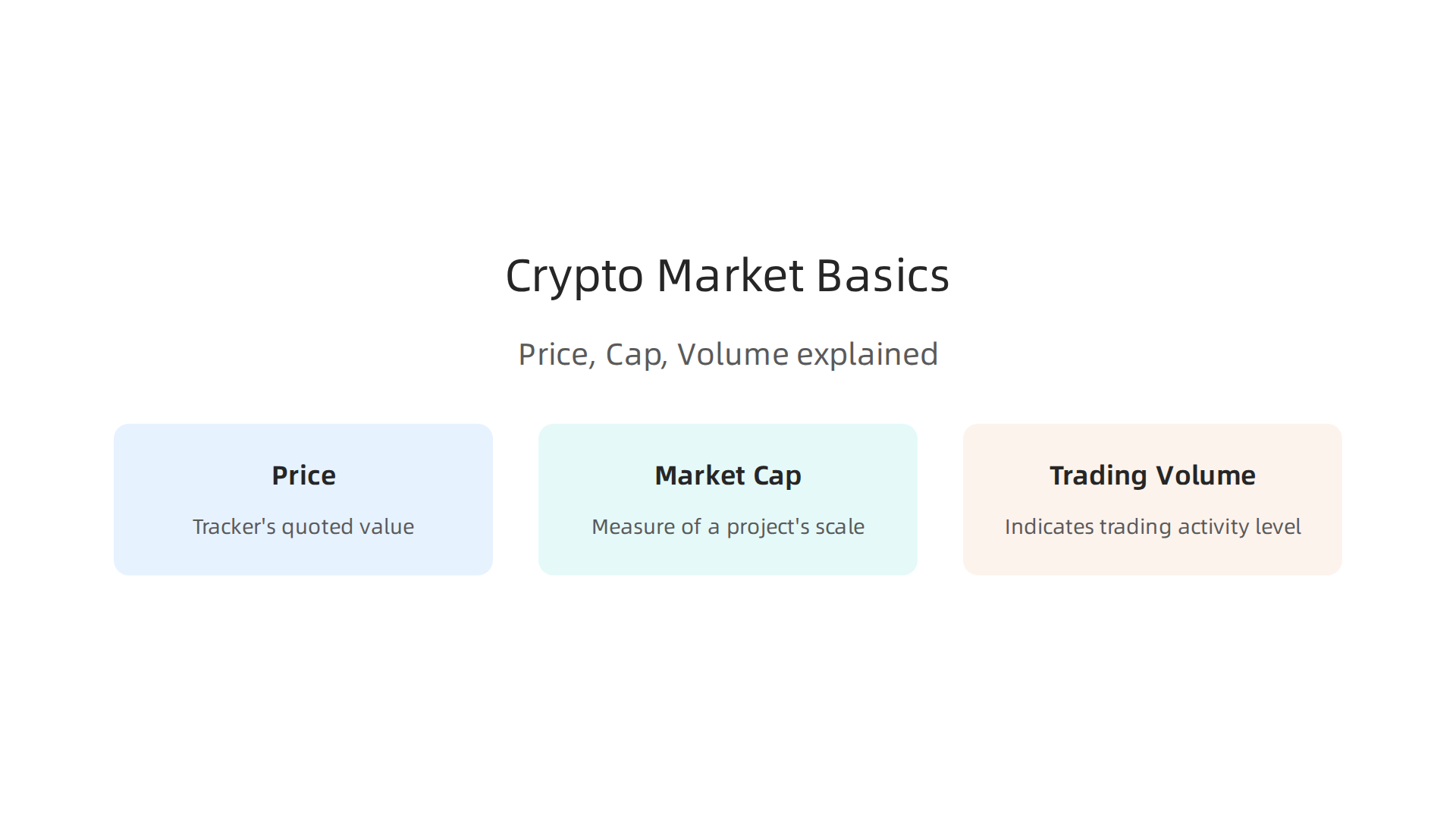
- Price vs. Market Cap: A coin’s price alone is misleading. A coin costing $0.01 isn’t necessarily "cheap." The real size of a project is its market cap—the total value of all its coins in circulation. You can use a crypto market cap calculator on any major tracking site. A small-cap coin is riskier and more volatile than a large-cap one like Bitcoin, regardless of the unit price.
- Trading Volume: This shows how much of a coin is being bought and sold. High volume means lots of interest and activity. Low volume can mean a coin is illiquid; its price might be easy to manipulate, and you could have trouble selling.
- Circulating Supply: Know how many coins are out there. With over 20,000 crypto coins in existence, supply matters. A huge supply can keep a per-coin price low, even if the total value is high.
These three metrics give you a snapshot of a project’s scale and activity. They help you ask better questions.
Spotting Reliable Info (And the Red Flags)
This is where most beginners get tripped up. The market is full of hype, scams, and bad advice. Your most important skill is learning who to trust.
Social media is a minefield. Research shows that crypto influencers often manipulate vulnerable investors with unrealistic promises. Be extremely wary of anyone promising guaranteed returns or pushing a "pump and dump" scheme.
Here are clear red flags:
- "Guaranteed" Returns or "Risk-Free": This is always a scam. The market is volatile; no one can guarantee profits.
- Urgency and Secrecy: "Get in now before it’s too late!" or "This private Telegram group has the real info." Scammers create fake ICOs and social media campaigns that look legitimate to create false urgency.
- Celebrity Impersonations: Fake endorsements from Elon Musk or other figures are common. Fake news significantly impacts crypto prices, and scammers exploit this.
- Asking for Your Private Keys or Seed Phrase: Never, ever share these. It’s like giving someone your bank account and PIN.
So where should you look? Start with a project’s own website and official documentation (the "whitepaper"). Check reputable news outlets, not just crypto-only channels. For a case study on how a specific project explains its purpose, our guide on what is XRP and why it exists shows what good research looks like.
A Simple Framework for Market Sentiment
You don’t need complex charts to gauge the market’s mood. Ask yourself these simple questions:
- Is everyone overly excited or fearful? When your social feed is flooded with can’t-miss hype, it might signal a market top or a potential crypto bubble. Extreme, widespread fear can sometimes signal a bottom.
- What’s the "story" driving the price? Is the move based on a real-world use case (like a new partnership for payments using stable coins) or just speculation and rumors?
- Are the basics healthy? Go back to your metrics. Is the rising price supported by high trading volume, or is it moving on thin air?
This framework helps you step back from the noise of every new crypto prediction market or live chart. It encourages calm observation over reactive trading.

The goal isn’t to become a technical analyst overnight. It’s to build enough understanding to filter out the noise, protect yourself from common pitfalls, and make more informed decisions. For ongoing, straightforward guidance that helps you build this knowledge step-by-step, consider the free Clicks and Trades newsletter. It’s designed to cut through the complexity with clear, actionable insights.
Ready to navigate the market with more confidence? Sign up for free guidance that helps you tune out the noise and focus on what matters.
Essential Crypto Concepts Every Beginner Should Know
You’ve started to see through the market noise. Now, let’s unpack the essential vocabulary you’ll hear every day. Understanding these terms is key to the true crypto meaning. It turns confusing jargon into clear ideas you can use.
Bitcoin vs. Altcoins: The First and the Rest
Think of Bitcoin as the original blueprint. It was the first cryptocurrency, created to be a decentralized digital money. Everything else is generally called an "altcoin," short for "alternative coin." As Consensys explains, the term was created to refer to any cryptocurrency other than Bitcoin.
Altcoins serve many different purposes. Some, like stable coins, are designed to have a stable value. Others enable smart contracts or specific applications. When people ask how many crypto coins are there, they’re mostly counting altcoins. With over 20,000 in existence, this category is vast and varied. For a deep dive into one major altcoin, you can explore our guide on what is XRP and why it exists.
Where You Store and Trade Your Crypto
Your crypto isn’t in a bank. It’s on the blockchain. To access it, you need two main tools: wallets and exchanges.
- Wallets (Hot vs. Cold): A wallet stores the private keys that control your crypto. A hot wallet is connected to the internet (like an app) and is convenient for frequent use. A cold wallet is an offline device (like a USB key) and is best for long-term, secure storage. Trust Wallet’s guide lists wallets as a fundamental term for beginners.
- Exchanges vs. Brokers: This is where you buy and sell. A crypto exchange is a platform where users trade directly with each other. It’s like a stock exchange. A crypto broker sells crypto directly to you, often at a set price, which can feel simpler. If you’re curious about a simpler trading experience, you might find our comparison on why forex trading can feel simpler than crypto insightful.
The Costs of Doing Business: Gas Fees and Smart Contracts
Blockchains need to process transactions and run programs. This costs computing power, paid for with fees.
- Gas Fees: This is the payment required to complete a transaction or run a contract on a network like Ethereum. Think of it as a network processing fee. It can go up and down based on how busy the network is.
- Smart Contracts: This is a revolutionary concept. A smart contract is a self-executing program stored on a blockchain. It automatically runs when preset conditions are met, without a middleman. For example, it could automatically release funds when a delivery is confirmed. This technology is the backbone of Web3.
Web3: The Big Idea
You’ll hear "Web3" a lot. In simple terms, it’s the vision for a new version of the internet built on blockchains. The goal is a web where users own their data and digital assets through concepts like smart contracts and tokens, moving away from control by big tech companies.
Crypto Slang Decoded: FUD, HODL, and More
The crypto community loves its slang. Here’s a quick cheat sheet to sound like you know what’s going on.
| Term | What It Means |
|---|---|
| Bear/Bull Market | A bear market is when prices are falling or expected to fall. A bull market is when prices are rising or expected to rise. These cycles are normal and often tied to broader crypto bubbles forming and popping. |
| HODL | A famous misspelling of "hold." It means to keep your crypto for the long term instead of selling it, regardless of price swings. |
| FOMO | "Fear Of Missing Out." The anxious feeling that makes you want to buy a rising asset because everyone else is, often leading to poor timing. |
| FUD | "Fear, Uncertainty, and Doubt." This is negative or false information spread to create panic and drive prices down. |
For an even more comprehensive list of terms, the Crypto Glossary from Binance is a fantastic resource.
Mastering these concepts is your next step in building confidence. It helps you understand what people are really talking about, from reading a woo charts bitcoin analysis to interpreting iota charts live. For a steady stream of clear explanations that help you connect these dots, the free Clicks and Trades newsletter offers simple, step-by-step guidance.
Ready to move from confused to confident? Sign up for straightforward insights that make these concepts stick.
A Simple Framework for Safer Crypto Exploration in 2026
Now that you know the language, let’s talk about action. The real crypto meaning for a beginner isn’t about getting rich quickly. It’s about exploring a new digital world without losing your shirt. Here is a simple, low-risk framework for your first steps in 2026.
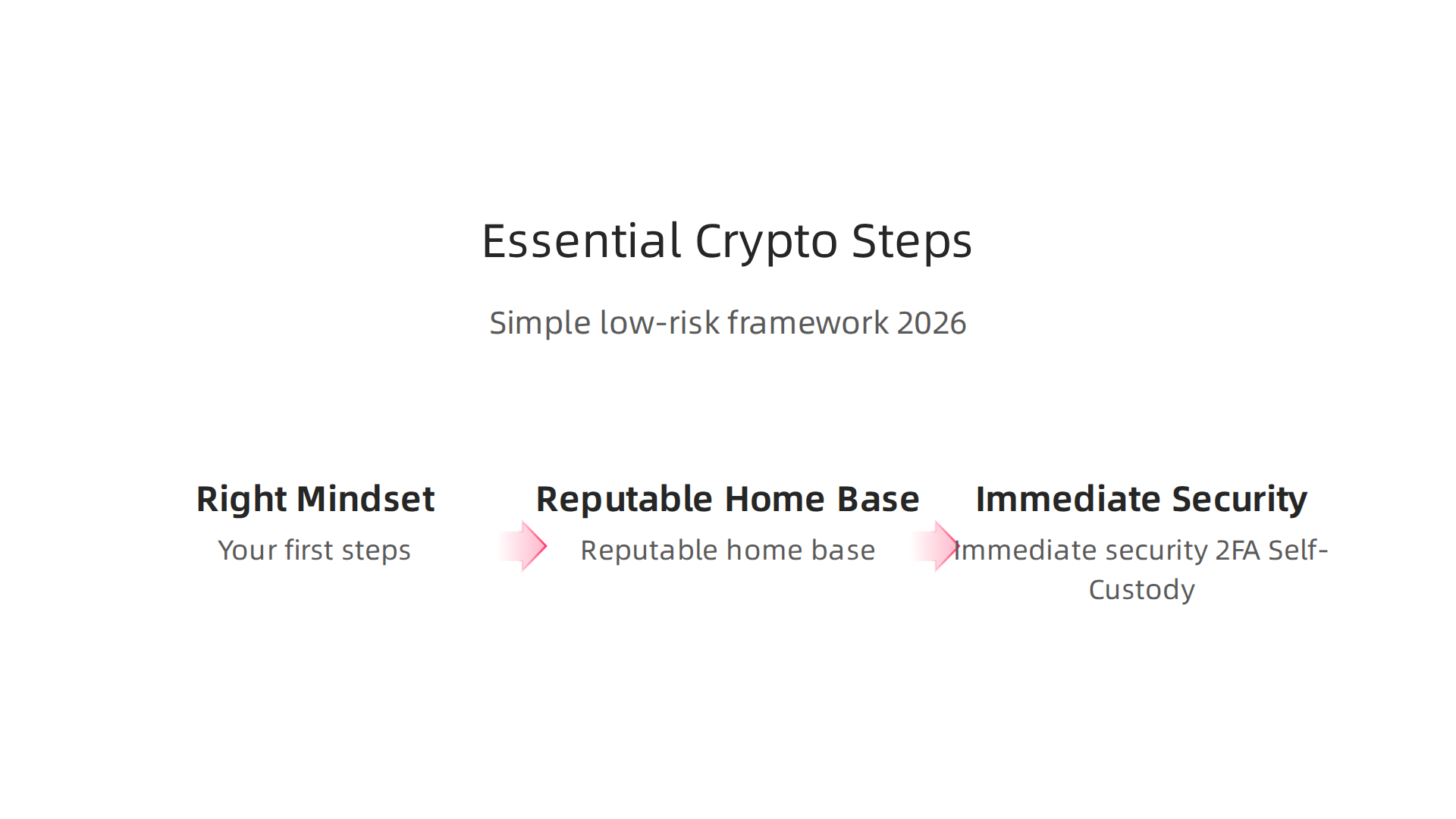
Step 1: Start with the Right Mindset, Not Your Wallet
Before you buy anything, set your expectations. The number one rule is simple: never invest more than you can afford to lose completely. This money should not be for your rent, groceries, or emergency fund.
Next, think long-term. Trying to day-trade based on woo charts bitcoin predictions or chasing crypto bubbles is a common beginner mistake. Your goal is to learn, not to outsmart the market overnight. A helpful 2026 safety guide confirms that a patient, informed approach is your best defense against common pitfalls. Understanding tools like a crypto market cap calculator can help you gauge the size of a project, but it doesn’t guarantee success.
Step 2: Pick a Reputable Home Base and Start Small
Your first platform is crucial. Choose a well-known, regulated exchange or broker to make your first purchase. Look for platforms with strong security histories and good customer reviews. A reputable 2026 guide on safe investing emphasizes that choosing a secure platform is the foundational step for protecting your assets.
Once you’ve picked a place, start incredibly small. Buy a tiny amount of a major cryptocurrency, like Bitcoin or a stable coin. The goal isn’t to make money yet. The goal is to learn the process: funding your account, placing an order, and seeing the asset appear in your account. This hands-on experience is priceless and risk-free.
Step 3: Lock Down Your Security Immediately
This is the most important step. In crypto, you are your own bank. Security is your responsibility.
- Fortify Your Accounts: Use a unique, strong password for your exchange account. Immediately enable Two-Factor Authentication (2FA) using an app like Google Authenticator, not SMS. As security experts note, phishing attacks that steal login details are among the top risks in 2026.
- Learn About Self-Custody: The crypto you leave on an exchange is not truly yours. For long-term holdings, moving them to your own wallet is key. Start by researching non-custodial wallets.
Remember the difference from the last section: a hot wallet (like Trust Wallet) is an app for smaller amounts, while a cold wallet (like a Ledger device) is a physical device for maximum security. A comprehensive 2026 wallet security checklist is a great resource to understand seed phrase protection and other vital practices.
- Stay Skeptical: If an offer seems too good to be true, it is. Avoid "unlimited approval" requests from strange websites and never share your seed phrase with anyone, ever.
Building confidence takes time. For a steady stream of clear, safe, and simple guidance that helps you navigate these steps without the stress, the free Clicks and Trades newsletter breaks everything down. It’s designed to help everyday users make calmer decisions, far away from the crypto funding rates frenzy and crypto prediction market noise.
Ready to explore with confidence? Sign up for straightforward insights and safety tips delivered to your inbox.
Trustworthy Tools & Resources for Ongoing Learning
Learning the crypto meaning is not a one-time lesson. It’s a continuous process. The good news? You don’t need to figure it all out alone. In 2026, using the right tools to learn and verify information is just as important as using a secure wallet.
Here are key types of resources that will help you build knowledge safely.
1. On-Chain Data Explorers: See for Yourself
Forget relying only on hype. On-chain explorers let you look directly at blockchain activity. You can see transaction volumes, how many large holders exist, and network health. Think of it as checking the public ledger yourself. This data helps you understand real use, not just price speculation. It can ground you when you hear about potential crypto bubbles. Using a crypto market cap calculator gives you one number, but on-chain data shows you the story behind it.
2. Reputable News & Data Aggregators: Cut Through the Noise
Find one or two primary sources for news and market data that focus on facts, not fear or greed. A trustworthy aggregator in 2026 will clearly cite sources, avoid sensational headlines, and provide context. They help you track major assets and stable coins without pushing you to make rushed trades based on crypto funding rates or other complex metrics.
3. Quality Community Forums: Learn from Real People
Communities can be valuable, but choose wisely. Look for forums with active moderation, a focus on education, and members who share detailed reasoning, not just price predictions. Be very careful in spaces dominated by a crypto prediction market mentality. A good forum discusses technology, security practices like those in this 2026 wallet security guide, and real-world use cases.
How to Judge Any Resource
Before you trust a tool or website, ask these questions:
- Transparency: Do they explain where their data comes from? Are they clear about sponsors or affiliations?
- Community & Longevity: Do experts and long-term participants respect it? Has it been reliable over time?
- Security Focus: Does the resource promote safe practices? A good sign is if they link to authoritative safety guides, like this comprehensive 2026 investment safety article.
As you explore, you’ll encounter thousands of projects. Wondering how many crypto coins are there? The number changes, but your strategy shouldn’t. Focus on understanding a few before worrying about them all. For example, if you come across a coin like XRP, take time to learn what it is and why it exists from an educational source. Compare different areas of finance to build context; sometimes, understanding why forex trading can feel simpler helps clarify what makes crypto unique.
The goal is to shift from seeking "the next hot tip" to becoming a confident, self-educated user. This journey is easier with clear guidance. For a steady, simple breakdown of market trends and safety tips without the overwhelm, the free Clicks and Trades newsletter is a great resource for continuous learning.
Keep building your knowledge safely. Sign up for straightforward insights and make continuous learning your most valuable crypto habit.
Summary
This guide decodes cryptocurrency for everyday investors by explaining core ideas—blockchain, decentralization, and cryptography—in plain language and showing how crypto differs from traditional money. It covers real-world uses like cheaper remittances, digital ownership, and DeFi, while also addressing environmental and illicit-use concerns. The article teaches you how to read market signals (price, market cap, volume), spot hype and scams, and apply a simple mindset-and-security framework to start safely. You’ll learn essential terms (Bitcoin vs. altcoins, wallets, gas fees, smart contracts), where to check reliable data, and which tools can help you keep learning without falling for noise. After reading, you should be able to evaluate projects more calmly, protect your holdings, and take small, informed first steps into crypto.
